2026-10-05
Manufacturing
2026-01-20
1767 Read.
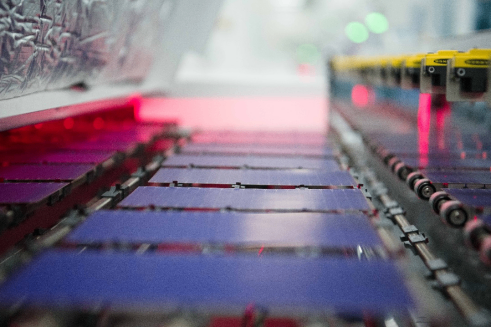
BEIJING - China has pledged to advance zero-carbon factory development to further tap the potential for energy conservation and carbon reduction in the industrial and information sectors, and to drive emissions cuts, efficiency gains, and green, low-carbon transition in key industries.
According to a guideline issued by five government departments including the Ministry of Industry and Information Technology (MIIT), China will begin selecting a group of zero-carbon factories from 2026 to set benchmarks for wider replication.
Zero-carbon factory development refers to a process in which factories continuously reduce carbon dioxide emissions within their premises and gradually move toward near-zero levels through emissions-cutting measures such as technological innovation, structural adjustment and management optimization.
Guiding industrial enterprises to pilot zero-carbon factory development is crucial for fostering new, high-quality productive forces tailored to local conditions. This approach will better align high-quality economic development with high-level environmental protection, supporting China's goals of peaking carbon dioxide emissions before 2030 and achieving carbon neutrality before 2060.
The guideline outlined a phased, tiered approach. By 2027, China will foster and build a number of zero-carbon factories in sectors including automobiles, lithium batteries, photovoltaics, electronics and electrical appliances, light industry, machinery and computing power facilities.
By 2030, the initiative will be gradually expanded to industries such as steel, nonferrous metals, petrochemicals, building materials and textiles, exploring new pathways for decarbonizing traditional energy-intensive sectors, according to the guideline.
The guideline also detailed key implementation routes, including establishing a carbon dioxide emissions accounting system to identify and quantify emissions and removals, encouraging eligible factories to build industrial green microgrids, and promoting the application of next-generation information technologies.
An MIIT official said the ministry will step up coordination and policy support, advance standards and sector-specific guidance for zero-carbon factories, gradually improve market-based mechanisms for green, low-carbon transition, and promote the application of zero-carbon factory development in areas including green consumption, green trade and green finance.

2026-10-05
Manufacturing
2026-09-10
Manufacturing

2026-08-17
Manufacturing
