2026-10-02
Companies
2026-01-29
1669 Read.
Two large screens displayed at the far end of the table at MKThink’s Ocean Plant area—displaying layers of GIS mappings, Revit-based spatial analysis, and activity density diagrams. As the visuals cycled through different layers, their combined analytical value became increasingly apparent. Sitting across from me was Minghui Li, Associate in Planning Systems at MKThink, who has spent recent years translating complexity into clarity for cities navigating profound transitions.
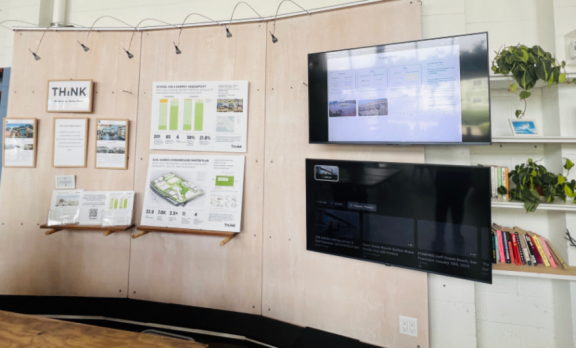
(Photo: Ocean Plant Exhibition Space)
At first glance, Li speaks with the composure of someone who has spent long hours listening: to communities, to data, and to the built environment itself. “Urban challenges rarely appear as isolated issues,” she began, “they surface as overlapping systems—movement, climate, culture, infrastructure—and our tools should help us recognize these intersections rather than overlook them.” This philosophy underpins her technical contributions to several major planning initiatives.
Her role at MKThink, a firm renowned for pioneering the concept of Spatial Intelligence, places her at the center of a practice that merges architectural design with data analytics, adaptive systems thinking, and long-range organizational planning. The studio’s three interconnected branches—MKThink, RoundhouseOne, and Ocean Plant—function as a collective that unites built-environment expertise, data-driven spatial analysis, and community-focused testing grounds. In this ecosystem, Li’s work bridges design representation and computational insight with notable ease.
One of the major projects she contributed to, the Earl Warren Showgrounds Master Plan, is a state-level initiative commissioned by the 19th District Agricultural Association of California. The 34-acre site, positioned between Santa Barbara and the surrounding unincorporated county lands, functions not only as an event campus but also as an emergency response hub. Li supported the conceptual framework of the plan by developing diagrams, 3D visualizations, and strategic planning graphics. More critically, she helped articulate a comprehensive set of ten planning principles that established the conceptual backbone of the Master Plan. These principles—ranging from transforming the site into a highly utilized activity hub and a core node within regional systems, to centering the campus around a natural park, operating as a sustainable ecosystem, and prioritizing safe, human-scaled pedestrian movement—provided a clear and scalable framework for long-term development. Together, they enabled both the client and community stakeholders to understand how the site could incrementally evolve into a flexible, multi-functional civic asset while remaining responsive to changing social, environmental, and economic conditions.
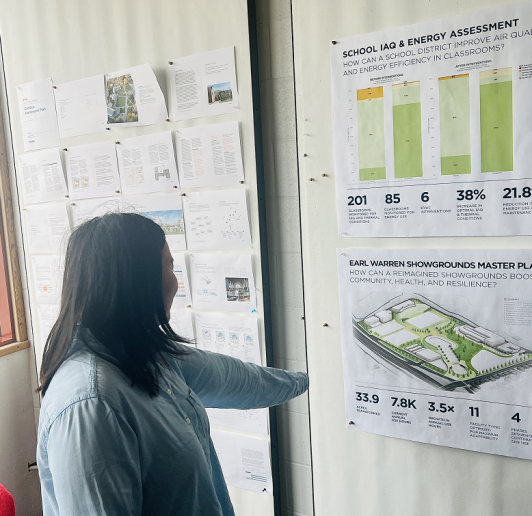
(Photo: Minghui Li, Associate in Planning Systems at MKThink)
In our conversation, she recalled the challenge of translating such a heterogeneous site into a coherent campus vision. “It wasn’t only about designing for events or recreation,” she explained. “We had to imagine a place that responds to daily community rhythms, educational uses, emergency scenarios, and long-term ecological shifts. The plan had to operate as a clear and adaptable framework—one that could increase effective time-in-use by balancing program quantity, intensity of use, temporal distribution, and spatial adaptability, rather than relying solely on physical expansion.”
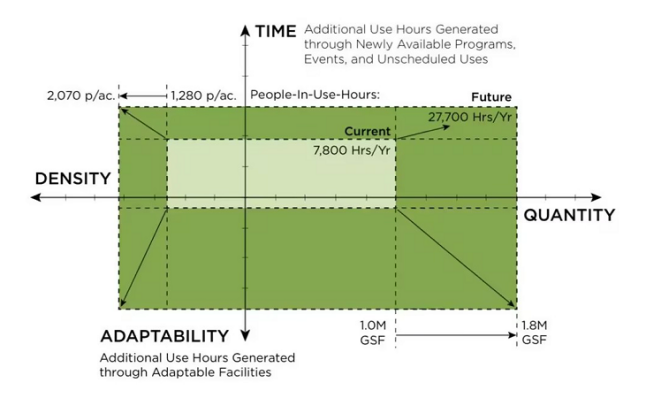
(Drawing 1: Site Utilization Potential)
Her strategy tool synthesized existing conditions through these four dimensions, making spatial constraints and opportunities legible during committee deliberations and enabling stakeholders to compare scenarios, understand trade-offs, and align around a shared strategy for transforming the site into a highly utilized, multi-functional activity hub.
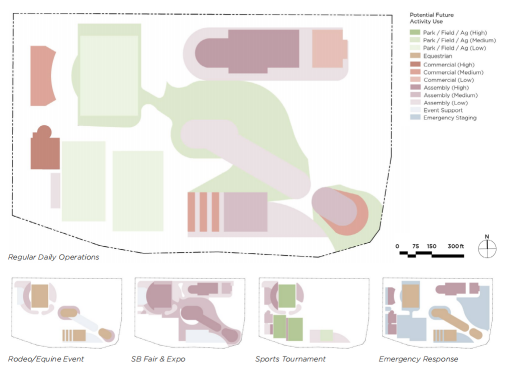
(Drawing 2: Activity Use)
This emphasis on data-informed clarity carries directly into another of her major assignments: the Central Maui Planning and Statewide Educational Specification project, commissioned by the Hawai‘i School Facilities Authority. Li performs GIS-driven demographic and spatial analyses to evaluate regional needs, while also constructing Revit-based classroom models for 21st-century school design guidelines. When asked about translating data into design guidance for educational environments, she paused before responding: “Schools are more than buildings. They’re social ecosystems shaped by culture, geography, and community equity. When GIS reveals where needs are most acute, planning stops being abstract—it becomes accountable.”
This approach extends seamlessly into another project under her leadership—the Pacific School of Religion (PSR) Campus Vision & Holbrook Hall Space Evaluation. She developed interior Revit models, axonometric diagrams, and room schedules to support long-term space planning for a historic campus facing underutilization and shifting program demands. Throughout these projects, Li also plays an internal role within MKThink. She participates in firm-wide documentation and marketing efforts, shaping white papers, public-facing project pages, and visual reports. This work, though less publicized, reinforces MKThink’s reputation for design clarity and strategic communication—an essential asset in a field where decisions must be legible to communities, public agencies, and policy makers alike.
As our discussion shifted, I brought up her broader views on the evolution of urban planning. “Cities are becoming more complex, not less,” she said. “Climate volatility, social inequity, infrastructural aging—none of these challenges can be solved through aesthetic design alone. What we need is a methodology that learns from patterns, anticipates stress, and adapts continuously.” This perspective reflects MKThink’s own ethos, yet in Li’s articulation it becomes personal: a belief that planning must not only solve spatial problems, but reveal invisible relationships shaping community life.
Her background—spanning data-driven design methodologies, community-centered spatial planning, and interdisciplinary visualization—has positioned her as a rising figure in the urban planning field. Whether she is developing a GIS-based framework to assess community needs in Hawai‘i or building Revit models to evaluate campus redevelopment options, Li’s work consistently demonstrates precision, foresight, and a commitment to human-centered design.
Before concluding our interview, I asked what she sees as the next frontier of urban design intelligence. She smiled—not evasively, but thoughtfully. “Cities produce behavioral intelligence long before they produce measurable datasets,” she said. “Our responsibility is to build tools and frameworks that can listen—to behaviors, to ecosystems, to histories. If our systems can learn to listen better, our cities will learn to grow better.”
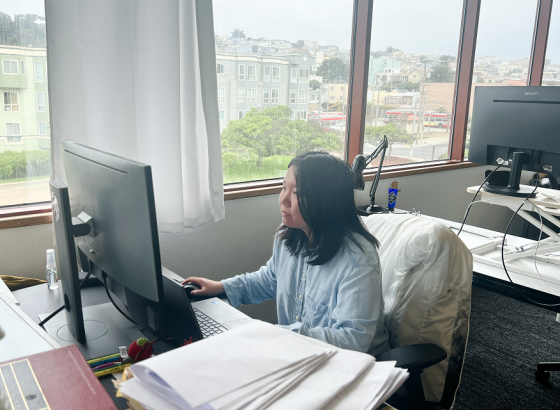
(Photo: Minghui Li at work)
In a field often dominated by sweeping visions or abstract policy terms, Minghui Li stands out for her ability to translate complexity into practical, grounded insights. She is helping shift urban planning from reactive decision-making toward a model of anticipatory, intelligent design. And in the years ahead, as cities confront new uncertainties, voices like hers will undoubtedly shape how the discipline evolves.

2026-10-02
Companies

2026-09-17
Companies

2026-08-27
Companies
